

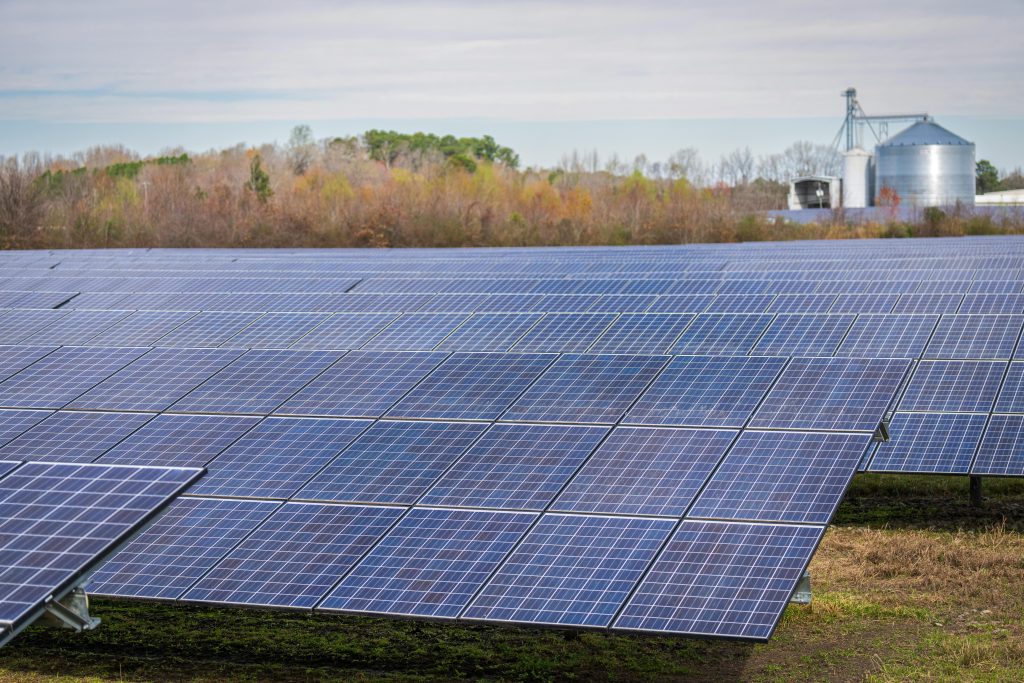
Catalonia faces a significant challenge: making up for lost time in renewable energies. Although progress has been made compared to previous years, renewable energies accounted for only 21.6% of Catalonia’s electricity production in 2024 (ICAEN, 2024), a figure still far below the national average (56.8%) and insufficient to meet the energy transition goals. The region needs to reduce its dependence on external sources and nuclear energy, which still provides almost 60% of its energy production.
The promotion of solar energy has encountered difficulties and resistance, particularly from the agricultural sector. Rural organizations warn that installing photovoltaic panels on agricultural land could lead to a loss of food production, exacerbating an already high dependence: Catalonia produces less than half of what it consumes. This debate highlights the need for an energy model that does not pit the energy transition against the future of agriculture, but rather makes them compatible.
Catalonia needs to reduce its energy dependence and move toward a renewable future with territorial cohesion.
To address this situation, the Generalitat has introduced modifications to the Climate Emergency Law and defined criteria aimed at organizing and balancing the deployment of new installations. The goal is clear: reduce the social and territorial impact of projects while promoting self-consumption and distributed generation.
Key points of the new model
- Prioritize local installations of medium or small size.
- Ensure agreement with local communities before starting a project.
- Protect high-value agricultural land, allowing only solutions that combine agriculture and photovoltaics.
- Promote distributed generation, compensating urban areas that do not cover at least 50% of their consumption with renewable energy.
This framework opens the door to new opportunities. One of the most notable is agrivoltaics, which allows the same space to produce both food and energy, creating positive synergies between the two sectors. There is also great potential in promoting self-consumption and energy communities, which give citizens and municipalities a central role, encourage savings, and strengthen social cohesion.
Additionally, the deployment of solar installations, when carried out consensually and respectfully, can stimulate the local economy, create jobs, and provide additional income for rural areas.
In short, Catalonia’s solar challenge is not only a technical or regulatory issue but also a social and territorial one. The country’s energy future will depend on the ability to develop a model that combines sustainability, dialogue, and innovation. If progress is made in this direction, solar energy will become an opportunity not only to reduce emissions and increase self-sufficiency but also to strengthen the economic fabric and preserve our agricultural heritage.
At Solager, we believe this is the path forward: turning the sun into a driver of clean, resilient, and shared development for all of Catalan society.
